The Seven Gravel Race in Nannup offered a first high-level test on the courses that will host the 2026 UCI Gravel World Championships later this year.
In the men elite race, the action started early. After the fast opening kilometres, the first major climb immediately broke up the peloton, reducing a large group to a strong front selection featuring Australian national champion Mark O’Brien, former winners Brendan Johnston and Tasman Nankervis, alongside Mark Chong, Robert Power and Harrison Bebbington.
Last year’s winner O’Brien looked particularly strong and eventually managed to edge clear on one of the decisive climbs, opening a small advantage over his rivals.
However, the race remained wide open behind him. Johnston, using his experience on this course, timed his effort perfectly. In the final part of the race, he closed the gap and proved the fastest in the run to the line, taking his second victory at SEVEN after already winning in 2024. O’Brien had to settle for second place, just 7 seconds behind, while Bebbington completed the podium at 29 seconds.
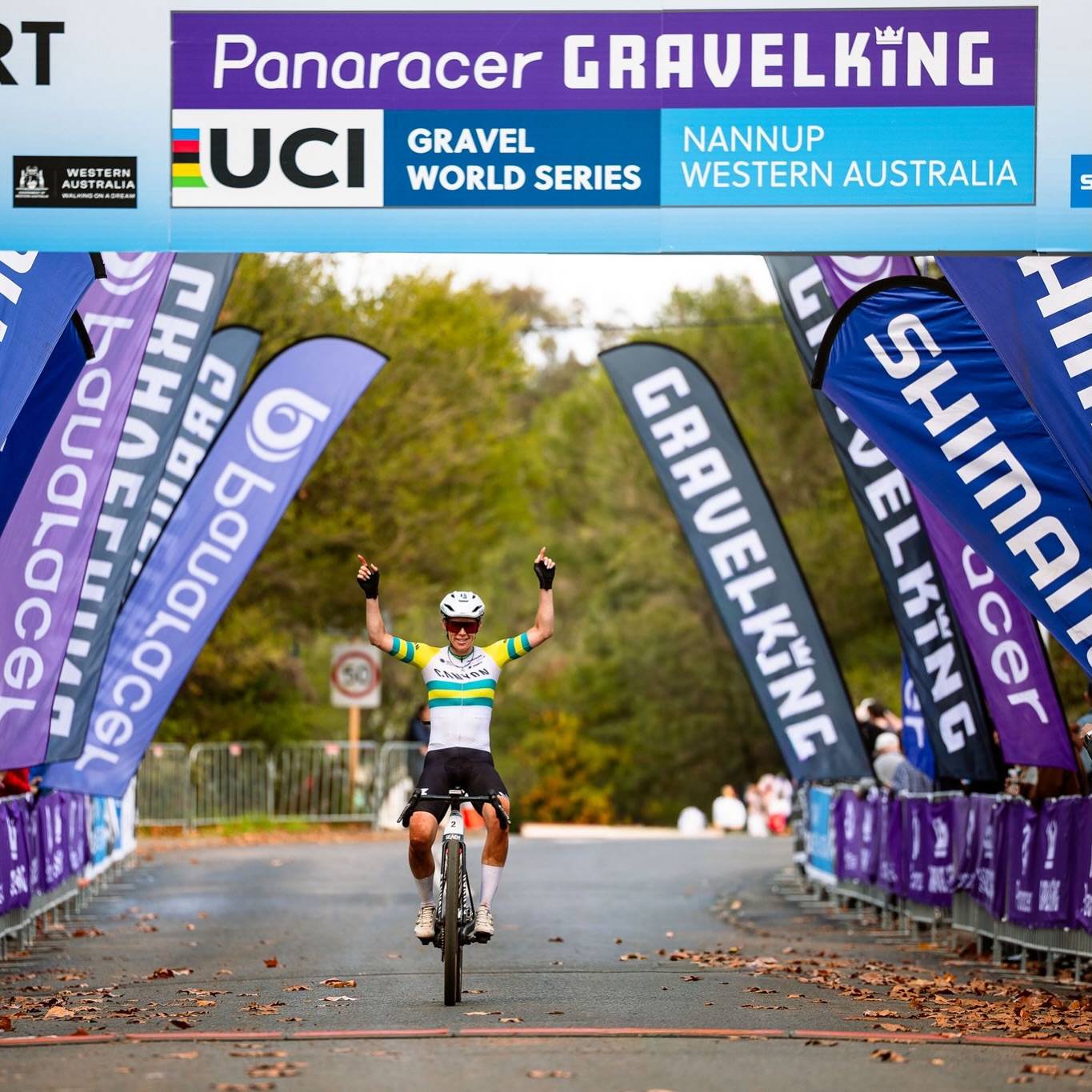
In the women elite race, a similar scenario unfolded. The first climb immediately reduced the field to three riders: Maria Laurie, Tiffany Cromwell and Matilda Raynolds. The trio worked together through the middle part of the race before Cromwell made her decisive move with around 15 kilometres remaining.
Once clear, the Australian national champion steadily increased her advantage to take her third victory at SEVEN, finishing around 2 minutes 30 seconds ahead of Laurie who secured second place by winning the sprint against Raynolds.
The day also saw the presence of Formula 1 driver Valtteri Bottas, partner of Cromwell, who completed the race in the 35–39 age group.
With over 2,000 riders tackling the course, the Seven Gravel Race once again confirmed its status as one of the toughest events in the UCI Gravel World Series — and a perfect preview of what awaits when the world’s best return to Nannup in October to race for the rainbow jersey.